- Privacy-friendly measurement begins with a clear objective: stress prevention, sustainable employability, or improved team support.
- Collect only the data necessary to understand mental strain and stress patterns.
- Where possible, utilize aggregated insights at the team or organizational level rather than individual assessments.
- Communicate clearly in advance what is being measured, why it is being done, and how the results will be used.
- Brain Wellness Lab combines data-driven analysis with careful interpretation, without labeling or evaluating individual employees.
- Why privacy is important in stress assessments
- What you should and should not measure
- Transparency and trust as a foundation
- From individual data to team insights
- How Brain Wellness Lab operates with care
Why privacy is important in stress assessments
Mental strain and stress are sensitive topics. Employees must be able to trust that assessments will not be used to evaluate, monitor, or disadvantage them. Without trust, hesitation, socially desirable answers, or resistance to the assessment will arise.
Therefore, an effective stress assessment does not start with technology, but with the question of why the measurement is being conducted. Does the organization aim to prevent burnout, better understand workload, improve recovery, or strengthen team dynamics? The clearer the objective, the better one can determine which information is genuinely required.
Privacy-friendly measurement does not mean organizations cannot investigate anything. It means that assessments are conducted carefully, proportionately, and transparently. The analysis must contribute to better conditions for employees and teams, not to surveillance or individual appraisals.
What you should and should not measure
Not all data is necessary to understand mental workload. Patterns in work pressure, recovery, communication, focus, task complexity, and team dynamics are often sufficient to gain valuable insights. Collecting more data is not automatically better.
A key principle is to measure only what aligns with the objective. If the goal is to identify stress patterns within a team, not every detail regarding individual health or personal circumstances needs to be captured. The less sensitive the data and the clearer its use, the greater the likelihood that employees will trust the process.
| What to measure carefully | What to handle with caution |
|---|---|
| Perceived workload and mental strain. | Medical or personal health information not necessary for the objective. |
| Recovery, focus, and task complexity in broad terms. | Detailed individual monitoring without a clear necessity. |
| Team dynamics, communication patterns, and collaboration. | Data that could lead to personal appraisals or monitoring. |
| Aggregated insights at the team or organizational level. | Reports in which individual employees are identifiable without necessity. |
| Clear trends and recurring stress patterns. | Isolated scores without context or professional interpretation. |
Transparency and trust as a foundation
Employees must know in advance what is being measured, why, and what will be done with the results. Vague communication quickly breeds distrust. If people suspect that a measurement is intended to monitor performance, they will respond less openly.
Transparency also means clarity regarding who has access to the results. Are insights used by HR, executive leadership, managers, or only within facilitated sessions? Are results discussed at the team level or provided as individual feedback? The more concretely this is explained in advance, the safer the process feels.
Trust is also built through the right tone. A stress assessment should not be presented as a monitoring tool, but as an aid to better understand workload, recovery, and collaboration. When employees notice that the organization genuinely aims to improve conditions, their willingness to participate increases.
From individual data to team insights
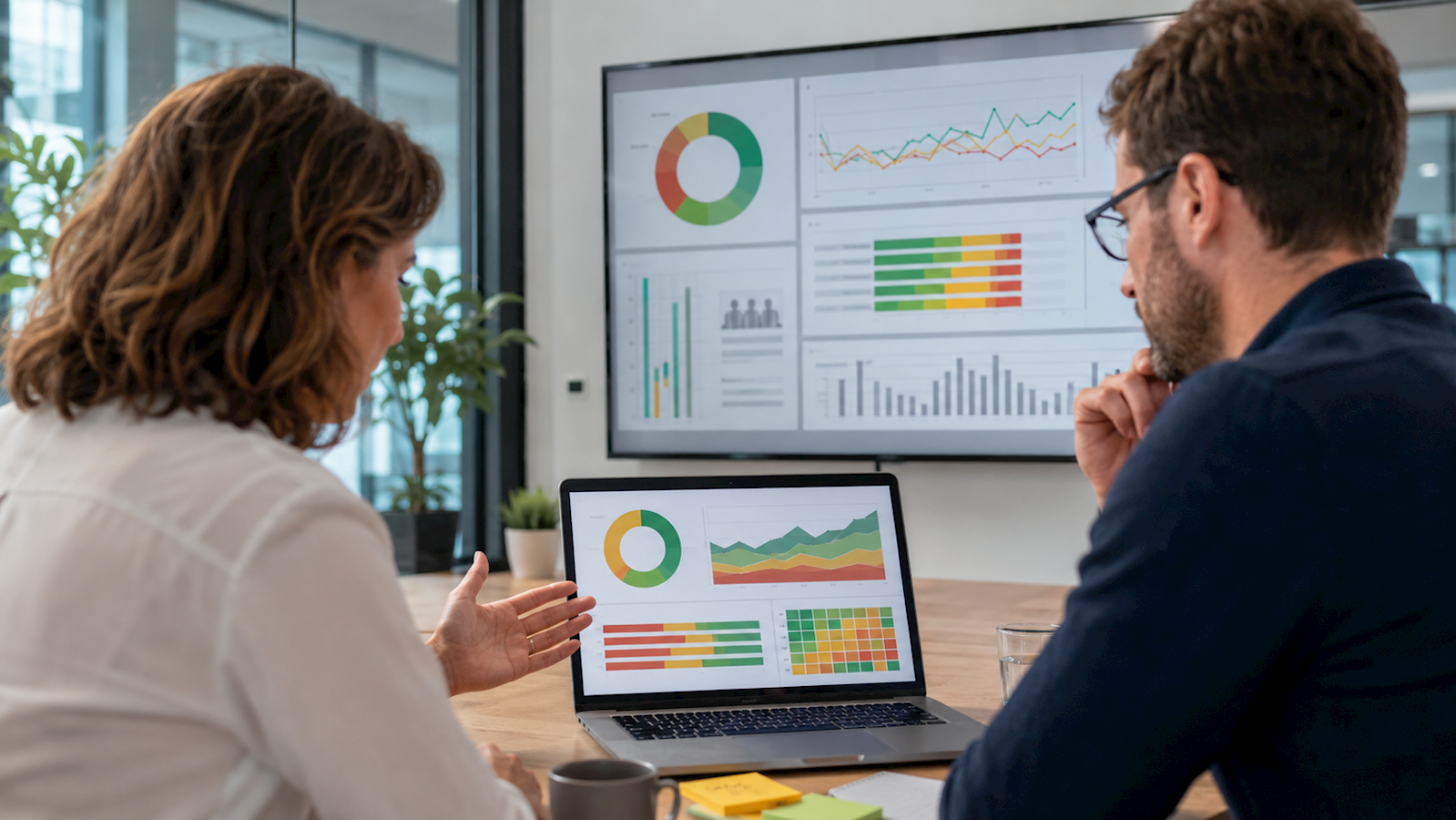
In many organizations, the greatest value lies not in individual scores, but in patterns at the team or organizational level. Recurring signals within a department can, for example, indicate unclear priorities, excessive interruptions, lack of recovery, low psychological safety, or complex decision-making processes.
By analyzing results in an aggregated manner, the focus shifts from “who is stressed?” to “where does strain originate and which patterns do we observe?” This makes the dialogue safer and more strategic. Employees are less likely to become the subject of appraisal, and the organization gains better visibility into structural causes.
This does not mean individual support is never needed. If an employee requires assistance, appropriate space must be provided. However, for organizational development, it is often more effective to examine recurring patterns and circumstances that cause or amplify stress.
How Brain Wellness Lab operates with care
Brain Wellness Lab approaches mental strain as a professional organizational matter. The analysis focuses on insight, prevention, and sustainable performance, not on individual assessment. In doing so, careful consideration is given to which data is needed and how results can be communicated in an understandable and responsible manner.
With the NeuralApex® methodology, signals concerning mental strain, stress patterns, recovery, team dynamics, and behavior under pressure are examined in context. It is precisely this cohesion that reveals where pressure arises, without reducing employees to isolated scores.
Based in Gastel in North Brabant, near the Brainport Eindhoven region, Brain Wellness Lab supports organizations seeking to work in a data-driven manner without compromising employee trust. This is essential for HR, executive leadership, and management teams that take stress prevention seriously while handling privacy, safety, and organizational support with the utmost care.
Frequently asked questions about measuring mental workload and privacy
Yes, mental strain can be measured in a privacy-compliant manner when the objective is clear, only necessary data is collected, and results are communicated carefully. Where possible, insights are aggregated at the team or organizational level. The goal must be to understand workload and stress patterns, not to monitor employees.
What data is required to understand stress patterns?
To understand stress patterns, data is often needed regarding perceived workload, mental strain, recovery, focus, task complexity, communication, and team dynamics. Usually, it is not necessary to collect extensive medical or private personal details. The appropriate data depends on the objective of the analysis.
Why is transparency important in stress assessments?
Transparency is essential because employees need to know what is being measured, why it is being done, and how results will be utilized. Without clarity, a stress assessment can feel like monitoring. Clear communication builds trust, prevents resistance, and enables employees to participate more openly and securely.
Should mental strain be measured individually or at the team level?
That depends on the objective, but for organizational development, team insights are often more valuable and secure than individual scores. Aggregated results highlight where workload, recovery deficits, or stress patterns arise without evaluating employees individually. Tailored individual support can also be arranged separately and with care.
How does Brain Wellness Lab prevent stress data from being used as a monitoring tool?
Brain Wellness Lab designs stress assessments around insight, prevention, and improving workplace conditions. The analysis examines patterns in mental workload, team dynamics, and behavior under pressure, rather than labeling employees. By connecting data to context and professional interpretation, isolated scores are prevented from being used as appraisal tools.
Related articles
- How do you make invisible stress in teams measurable?
- What is cognitive load in the workplace?
- What is the NeuralApex® methodology?
- What is the difference between symptom relief and structural stress analysis?
- How do you prevent burnout in high-performance teams?